A Landscape Born of Trade
Kerala's backwaters — a 900-kilometre network of lagoons, lakes, rivers and canals parallel to the Arabian Sea coast — are often described as one of the world's most beautiful natural landscapes. But they are also one of India's most significant heritage landscapes: a system of waterways that, for over two thousand years, carried spices, rice, coconut and Chinese trading vessels from the interior to the sea.
The Kettuvallam: A Floating Heritage
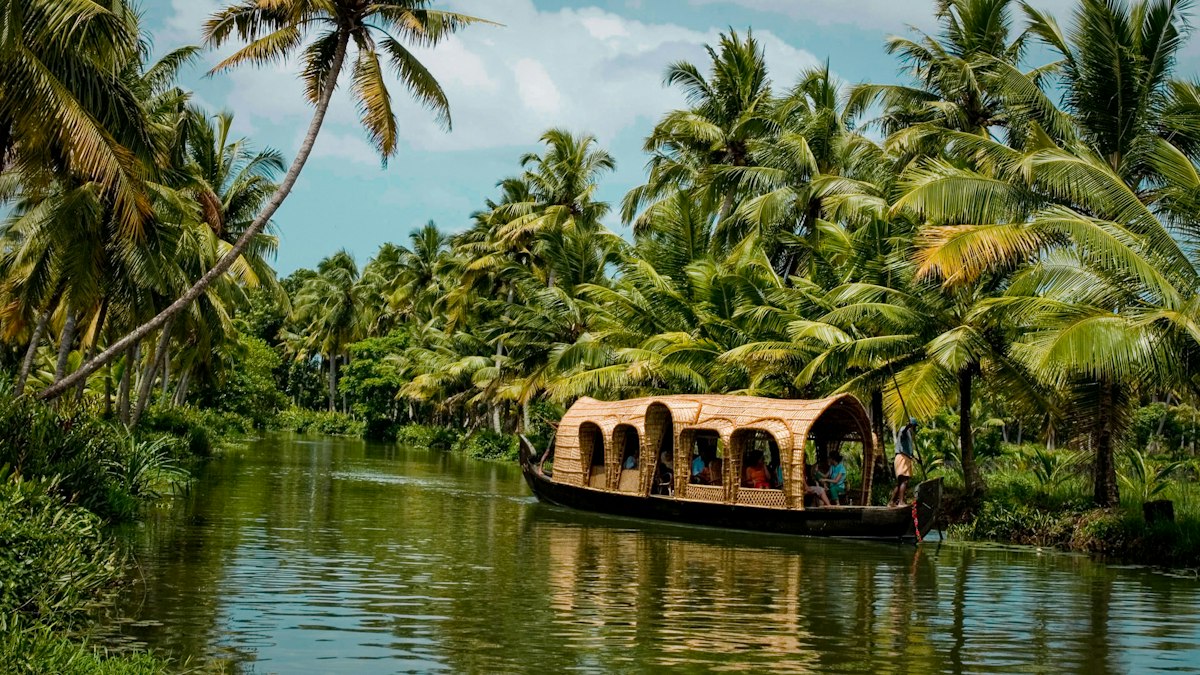
The kettuvallam — literally "knotted boat" — is the traditional rice barge of Kerala's backwaters. Built entirely from planks of jackwood stitched together with coconut rope and waterproofed with a paste made from fish oil and cashew nut shells, these 30-metre vessels once transported rice harvests and spice cargoes between Alappuzha, Kottayam and Kochi. Today, converted into luxury houseboats, they offer one of the most atmospheric overnight stays in India — sliding silently through lily-covered canals while kingfishers dart overhead.
Alleppey: The Venice of the East
Alappuzha (Alleppey) is the traditional gateway to the backwaters, a town of canals, bridges and colonial-era warehouses that earned its nickname from the Raj-era British. The town's harbour was once one of the busiest coir-export ports in Asia. Walking through Alleppey's oldest streets, you can still see the Dutch-era trading posts and British warehouse buildings that mark the town's mercantile past.
The Nehru Trophy Boat Race
Every August, Punnamada Lake near Alleppey transforms into one of the world's most extraordinary spectacles: the Nehru Trophy Snake Boat Race. Over a hundred 30-metre chundan vallams (snake boats), each crewed by up to 100 rowers and decorated with golden canopies and silk umbrellas, compete in heats across the open lake. The race has roots in ancient rivalries between kingdoms. Standing on the bank as 10,000 rowers chant in unison and 100 boats surge through the water is an experience unlike anything else in India.
Village Life on the Backwaters
The most rewarding backwater experiences are found not on luxury houseboats but in the villages along the shore. Canoe tours through narrow canals pass coconut-thatch houses where women weave coir mats, fishermen repair nets with the same techniques their great-grandparents used, and children splash in the shallows after school. Several heritage homestays in Kuttanad offer village experiences with meals cooked in traditional wood-fired kitchens, served on banana leaves.
Best Time to Visit
October through February offers the best conditions: clear skies, cool temperatures and calm water. March through May is hot but less crowded. The monsoon (June–September) brings dramatic skies and intense green vegetation — the backwaters in the rain are extraordinarily beautiful, though some stretches of canal become choppy.